
Luxury shoe boxes are no longer just packaging—they are a critical part of your brand experience. For premium footwear brands, the box is often the first physical touchpoint customers interact with, shaping perception before they even see the product.
Yet many brands make a costly mistake: they treat packaging as a final step rather than an integrated part of product development. The result? Beautiful boxes that fail to elevate the brand.
In reality, the most successful brands design shoes and packaging together—creating a consistent, high-end experience from the first glance to the final unboxing.
In this guide, we’ll explore what defines a true luxury shoe box, why most packaging falls short, and 10 design ideas to elevate your brand.
What Defines a True Luxury Shoe Box (From a Customer Experience Perspective)
The perception of luxury starts instantly. The weight of the box, the texture of its surface, and the subtle tactile feedback all contribute to a sense of quality. When a customer picks it up, it should feel solid, refined, and intentional. This first interaction builds anticipation—a quiet sense of curiosity and expectation. The product is not yet revealed, but the customer already feels that something valuable is inside.
Anticipation is simple: to make the user “want to open.” This feeling is created through subtle but powerful cues. The weight of the box should feel substantial when picked up, immediately signaling quality. The surface texture adds another layer of perception—smooth, soft, or slightly resistant finishes all communicate refinement. Visually, the design should remain restrained, avoiding excessive exposure of what’s inside. This creates a sense of mystery.
User psychology: “It should be something premium inside.” “I’m curious to see what’s in there.”
Ritual is what follows. It happens during the opening process and transforms a simple action into an experience. Its essence is to make the user enjoy the process of opening. A well-designed shoe box does not reveal everything at once. Instead, it guides the user step by step, creating a sense of progression. The opening motion should feel controlled—smooth, yet with just enough resistance to slow the pace. Inside, layered elements such as wrapping or protective covers introduce sequence and rhythm, making each step feel intentional rather than random.
User psychology: “This feels thoughtful.” “I’m experiencing the brand, not just opening a box.”
Why Most Luxury Shoe Packaging Fails — And How to Get It Right
Many brands invest in packaging that looks premium, yet the overall brand still feels underwhelming. The issue is not the box itself, but the lack of alignment. When the packaging looks high-end but the brand feels cheap, it usually comes down to inconsistency. A refined shoe paired with mismatched packaging creates confusion rather than value. Even more common, packaging is treated as a final step—added after the product is complete, instead of being designed as part of the experience from the beginning.
A luxury box cannot fix a disconnected product story.
This is exactly why high-end brands approach packaging differently. They don’t treat it as a separate supplier task, but as an integrated part of the product journey.
To create true alignment, brands need to think in three dimensions. First is style alignment. A minimalist shoe should be paired with clean, understated packaging, while a bold streetwear design calls for expressive, graphic-driven presentation. Heritage products, on the other hand, benefit from textured materials and warmer tones that reflect craftsmanship.
Second is material and sensory consistency. The tactile experience of the shoe should be echoed in the packaging. Smooth leather pairs naturally with matte or soft-touch finishes, while more rugged designs call for stronger, more structured materials.
Finally, design timing is critical. Packaging should be developed alongside the footwear, not added at the end.
Once this alignment is clear, packaging becomes a strategic decision, not just a visual one. Once this alignment is clear, choosing the right shoe box design becomes much more strategic—rather than purely aesthetic.
10 Luxury Shoe Box Ideas
These are some carefully selected examples of luxury shoe boxes, listed in no particular order.
1. Luxury Satin Presentation Shoe Box
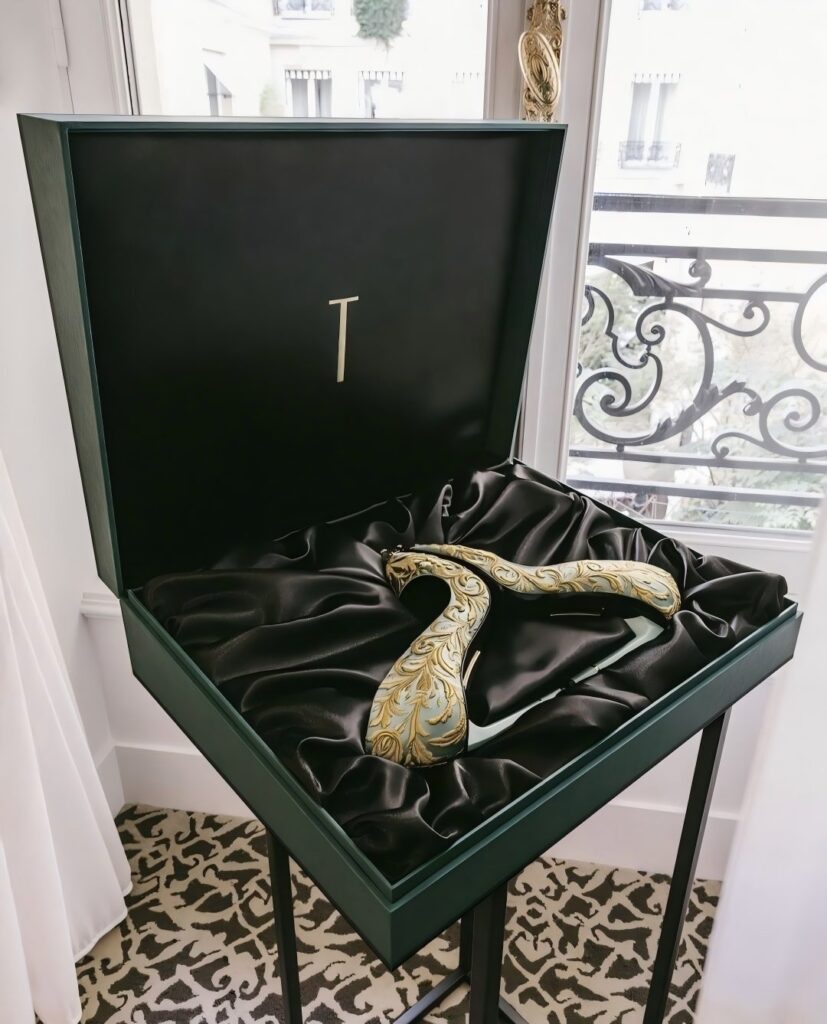
The box uses a rigid flip-top structure with a strong, square shape and thick edges, giving it a premium and durable feel. The exterior appears to be a deep forest green or dark emerald green, which creates a vintage, elegant, and high-end impression.
Inside the box, the shoes are placed on a rich black satin or silk-like lining. The fabric is arranged with soft folds, making the shoes look almost like jewelry displayed in a luxury case. This type of interior design adds a strong sense of ceremony and makes the unboxing experience feel much more refined. It makes the product feel less like an ordinary pair of shoes and more like a collectible fashion piece.
On the inside of the lid, there is a simple gold letter logo, which works as a subtle but elegant branding detail. The design is minimal, but the gold finish gives it a clear luxury touch.
Best suited for: high-end women’s shoes, designer heels, bridal shoes, evening shoes, limited-edition footwear, or bespoke shoe collections.
2. Wooden Dress Shoe Storage Box with Fabric Lining
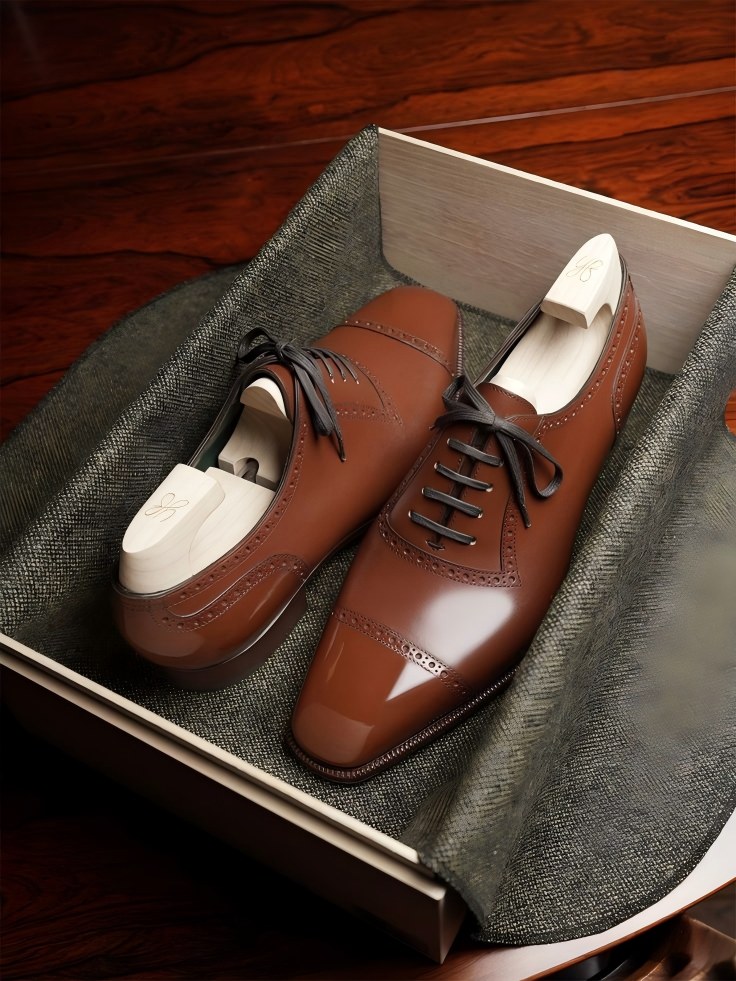
The box uses a wooden structure, with exterior and inner side panels in a light beige or natural wood tone. This gives the packaging a warm, refined, and artisanal look. Instead of relying on glossy finishes or strong visual branding, the box creates a quiet luxury feeling through natural material, clean structure, and thoughtful presentation.
Inside the box, the shoes are placed on a soft fabric lining with a tweed-like texture. The grey-green fabric wraps naturally around the shoes, working both as a protective layer and a visual backdrop. This fabric helps prevent scratches on polished leather while making the product feel more handcrafted and elegant.
The use of wooden shoe trees is an important detail. They help maintain the shape of the leather shoes, reduce creasing, absorb moisture, and present the footwear in a more professional way. The light wood tone of the shoe trees also visually matches the wooden box, reinforcing a consistent sense of craftsmanship.
Best suited for: premium bespoke leather shoes, Oxford shoes, Derby shoes, handmade dress shoes, premium loafers, and formal footwear collections.
3. Drawer-Style Shoe Box
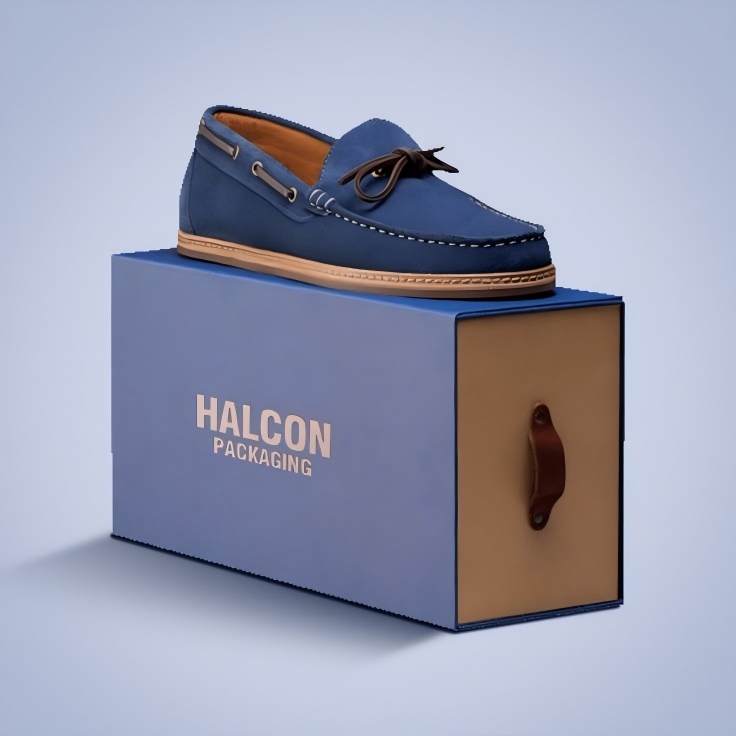
The box uses a rigid rectangular sleeve-and-drawer design. Compared with a standard lid-and-base shoe box, the drawer structure makes the packaging feel more refined, interactive, and reusable. The outer sleeve is finished in a clean blue tone, matching the blue suede loafer placed on top and creating a coordinated brand presentation. The front drawer panel uses a contrasting brown color, adding a warmer, leather-inspired detail to the overall design.
The drawer front is finished with a small leather pull handle, which makes the opening experience smoother while subtly reinforcing the handcrafted feel of the packaging. Together with the clean logo printing on the side panel, this detail helps the box feel practical, branded, and suitable for premium footwear display.
Best suited for: loafers, boat shoes, suede shoes.
4. Brand Story Insert Shoe Box
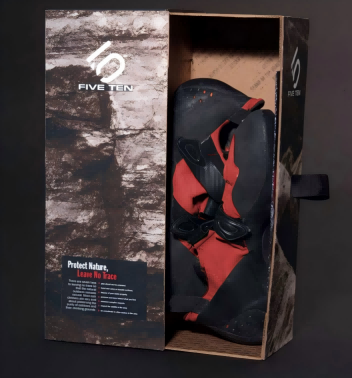
This is a brand story insert shoe box that turns packaging into part of the product experience, rather than just a protective container.
The vertical sleeve-and-drawer structure creates a more engaging opening process. As the drawer slides out, the shoes are revealed gradually, making the unboxing feel more intentional and memorable.
The exterior uses rock-texture imagery, dark earthy tones, and strong brand placement to connect the shoes with climbing, trails, and outdoor exploration. These visual elements make the box feel closely aligned with the product’s real-use environment.
A key feature is the brand story insert. Printed messages such as “Protect Nature, Leave No Trace” can be used to share the brand’s values, sustainability message, product philosophy, care instructions, or the story behind a specific collection. It works especially well when the packaging is used to share the brand’s values, design inspiration, craftsmanship background, sustainability message, or the cultural meaning behind a specific shoe collection.
Best suited for: any footwear collection that has a meaningful story, culture, or concept behind it.
5. Rustic Sustainable Shoe Box
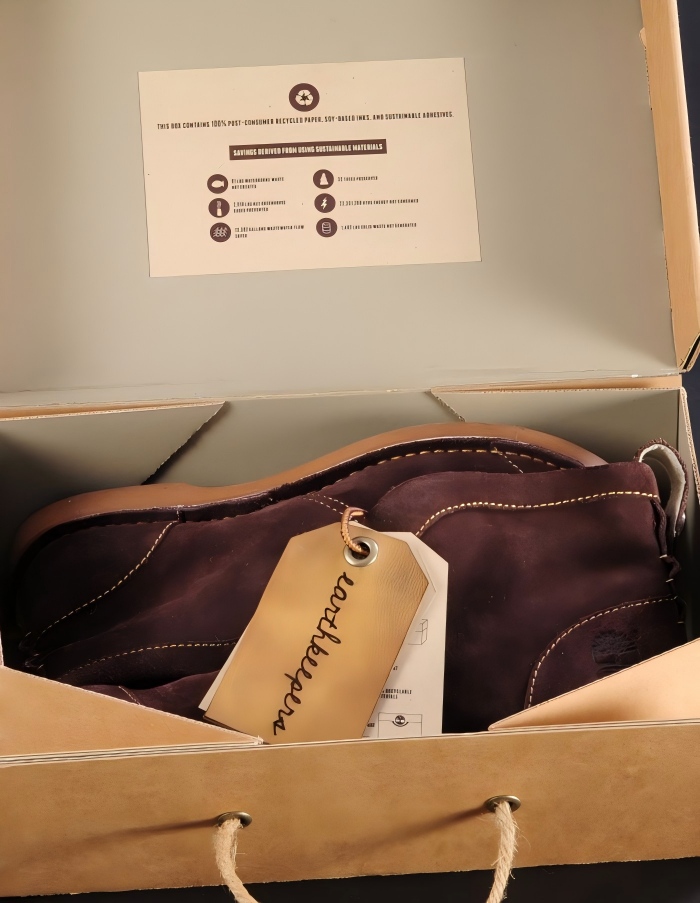
This is a Rustic Sustainable Box designed for footwear brands that want packaging to reflect natural materials, environmental values, and a more honest brand story.
The box uses a natural kraft cardboard structure, giving it a raw, practical, and eco-conscious look. Its visible paper texture, simple construction, and rope-style handle create a rustic packaging style that feels warm, understated, and environmentally responsible.
A key feature is the information insert inside the lid, which can be used to communicate recycled material content, soy-based inks, sustainable adhesives, carbon savings, or other environmental benefits behind the packaging. This turns the box into a useful storytelling space rather than just a protective container.
Another important advantage is that the box can be flattened into a single sheet after use, making it easier to store, transport, and recycle. This collapsible structure improves recycling convenience and further supports the box’s sustainable positioning.
Best suited for: handcrafted leather boots and other footwear collections that highlight sustainability, natural materials, handmade craftsmanship, and ethical production.
6. Minimal Linen Shoe Box
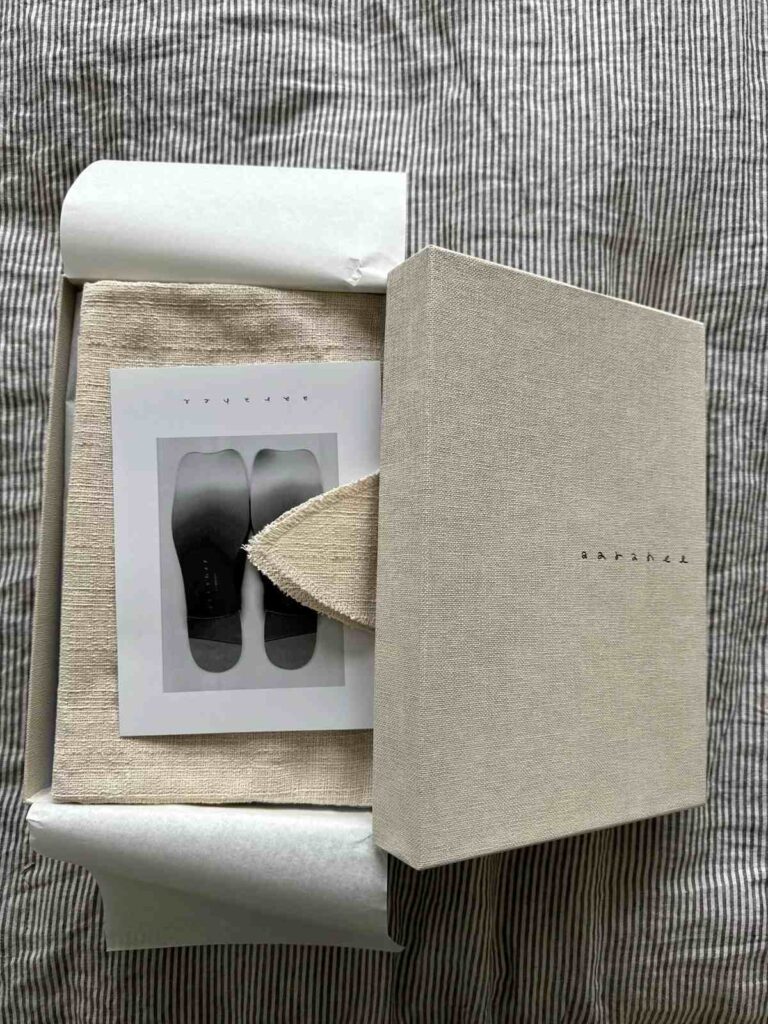
This is a minimal linen shoe box designed for brands that want a soft, natural, and understated packaging style. Compared with glossy or highly decorative luxury boxes, this design feels quieter, more artisanal, and closer to slow-fashion aesthetics.
The box uses a fabric-covered rigid structure with a beige linen-like exterior. Its textured surface feels warm and tactile, while the small logo printed on the lid keeps the branding subtle and refined. This restrained design is well suited to a quiet luxury brand image rather than bold visual impact.
Inside, the packaging includes white wrapping paper, a textured fabric pouch, and a printed product card. These details create a more layered unboxing experience. The pouch helps protect the shoes from scratches, while the card can introduce the product concept, care instructions, craftsmanship details, or the story behind the collection. It communicates comfort, purity, and refined simplicity through fabric texture, soft colors, and carefully arranged packaging details.
Best suited for: minimalist leather shoes, handmade flats, premium sandals, lifestyle sneakers, loafers, mules, and slow-fashion footwear collections.
7. Magnetic Ribbon Handle Shoe Box
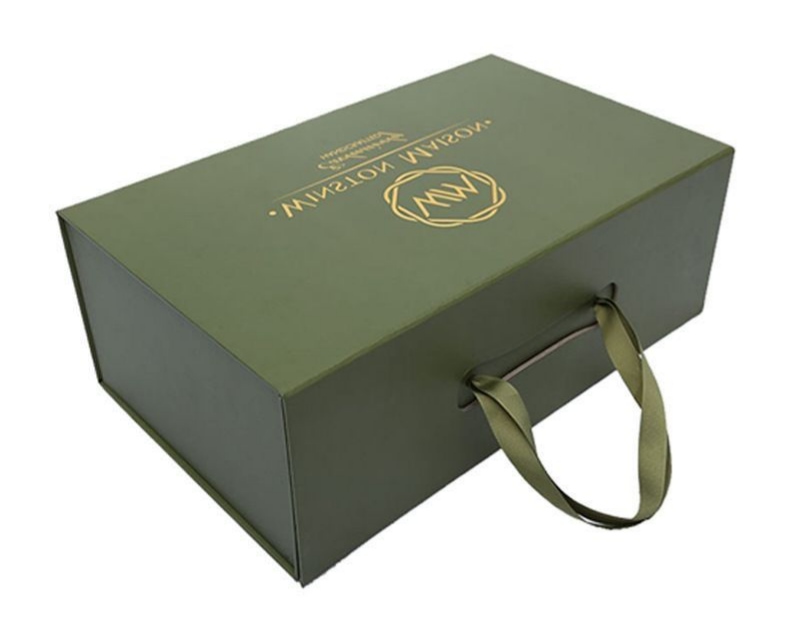
The box uses a rigid rectangular structure with a clean olive green exterior, giving it a calm, refined, and understated luxury feel. The gold logo printing on the lid adds a premium brand impression, while the simple box shape keeps the overall design elegant and easy to recognize.
A key feature is the ribbon handle on the front, which makes the box easier to carry and gives the packaging a more gift-ready appearance. The matching ribbon color also helps maintain a consistent and polished visual style.
This type of box use a magnetic closure, which makes the opening and closing experience smoother and more premium. Compared with ordinary tuck-in or lift-off shoe boxes, a magnetic closure adds convenience, better structure, and a more refined unboxing experience.
Best suited for: luxury sneakers, loafers, designer flats, premium sandals, dress shoes, and boutique footwear collections.
8. Striped Resort-Style Shoe Box
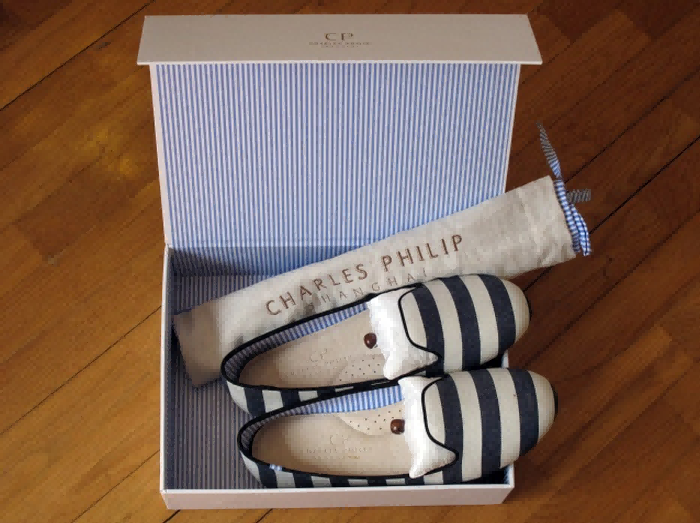
The box uses a thick rigid structure, giving it a firm, durable, and premium feel rather than the softness of ordinary cardboard packaging. Its exterior is finished in matte white, creating a clean and understated first impression. A gold foil logo on the lid adds a subtle luxury detail without making the design look overly decorative.
Inside, the box reveals a blue-and-white striped lining, creating a fresh coastal and resort-inspired feeling. This contrast between the minimal matte exterior and the decorative striped interior makes the packaging more memorable. The matching fabric dust bag further protects the shoes while strengthening the overall brand presentation.
Best suited for: lightweight fashion footwear, especially espadrilles, canvas flats, loafers, resort shoes, and summer lifestyle collections.
9. Luxury Ribbon Gift Shoe Box
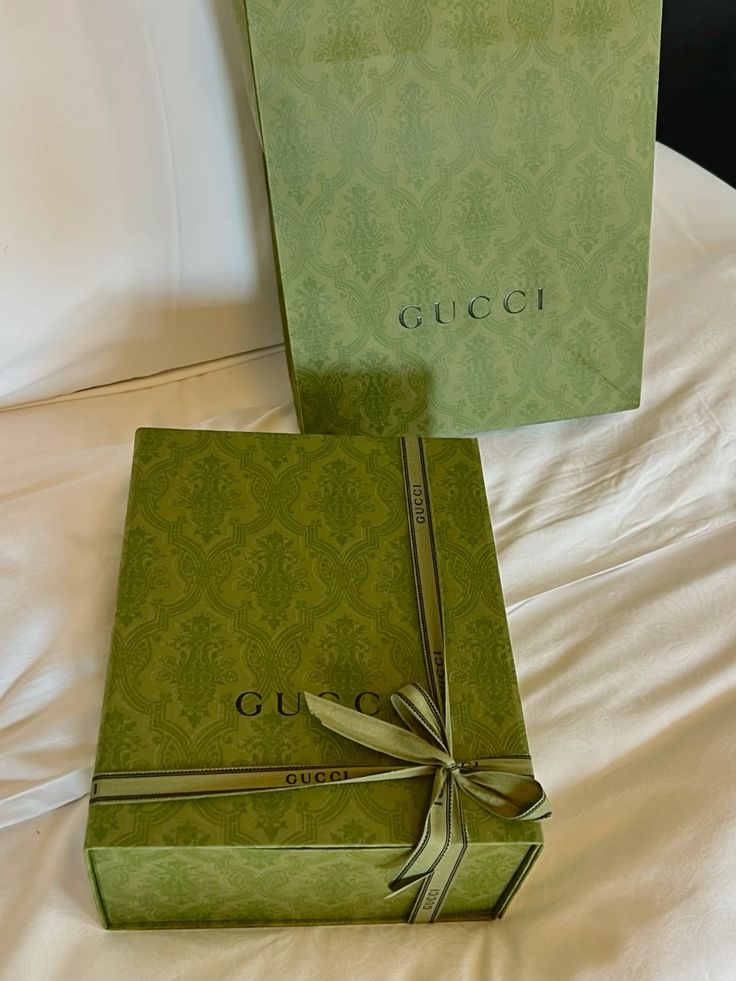
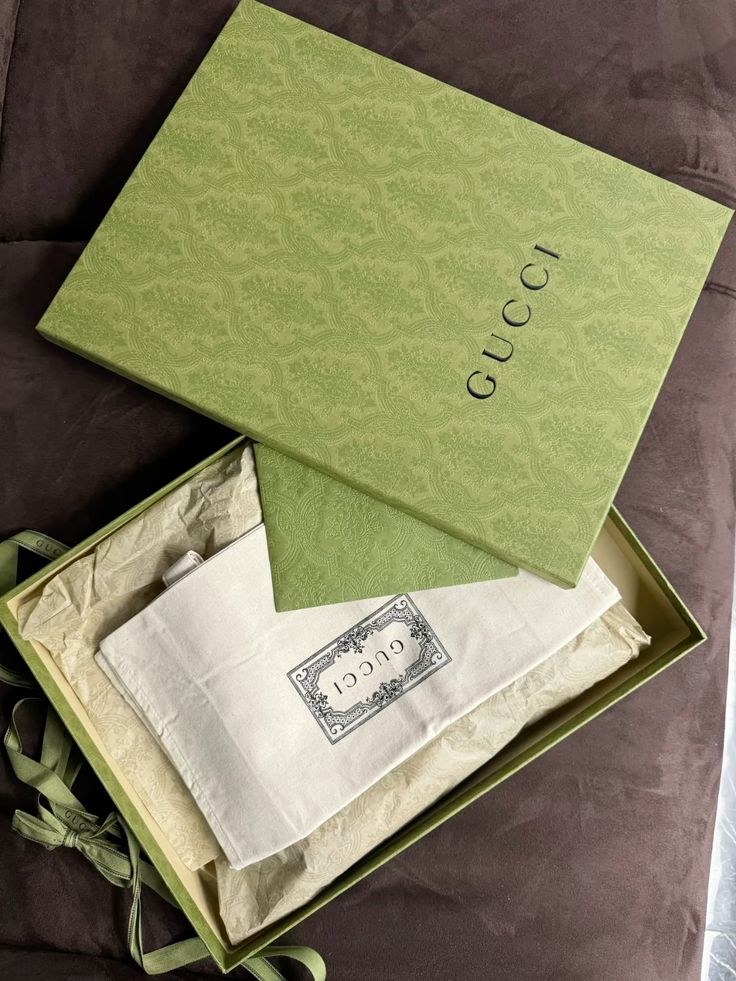
The box uses a rigid rectangular structure, giving it a firm and premium appearance. Its surface features an elegant green tonal pattern, creating a layered visual texture without relying on bright colors or heavy decoration. The muted green tone feels refined, vintage, and slightly romantic, making the packaging suitable for high-end fashion footwear.
A key feature is the ribbon wrapping design. The branded ribbon tied around the box adds a strong gift-box feeling and makes the unboxing experience more ceremonial. It also turns the packaging into part of the customer experience, rather than just a container for the shoes.
Inside, the box continues the same premium language. The interior includes branded tissue paper, a soft fabric dust bag, and carefully layered wrapping materials that protect the shoes while improving the overall presentation. The dust bag adds practical value by helping prevent scratches and dust during storage, while the printed label on the fabric bag reinforces brand identity.
Best suited for: designer heels, luxury loafers, premium flats, bridal shoes, fashion sandals, and limited-edition footwear collections.
10. Elegant Lid-and-Base Shoe Box with Pink Interior
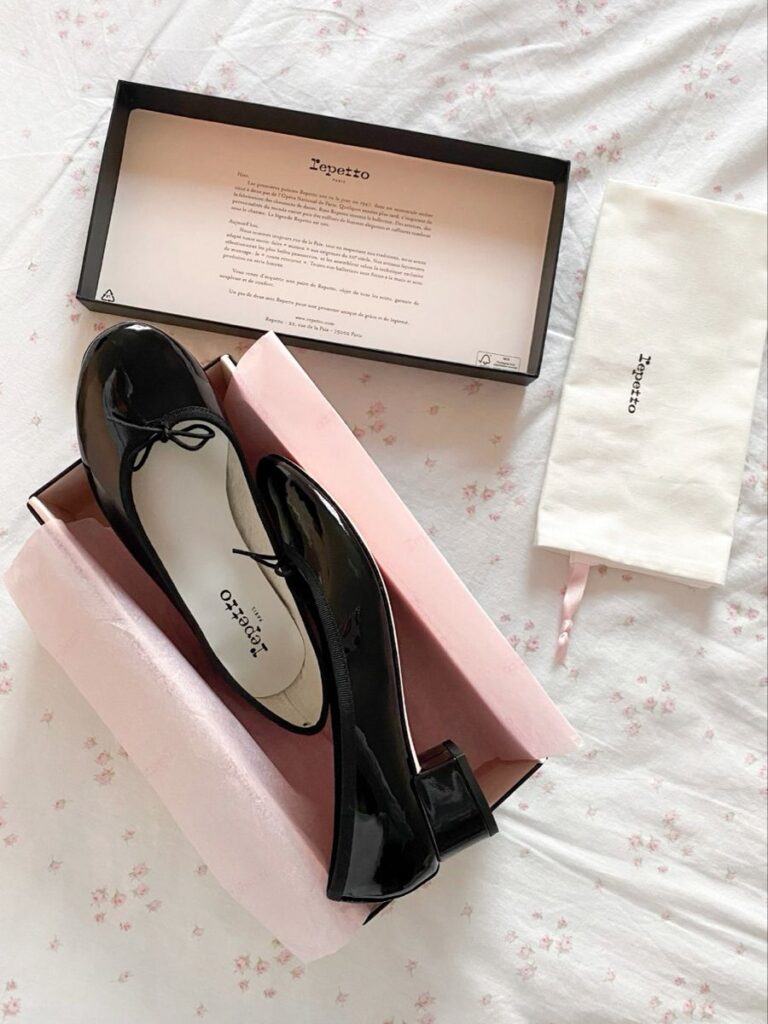
The box uses a rigid lid-and-base structure with a black outer frame and a pale pink interior. This color contrast creates a delicate but polished look: the black edge adds structure and sophistication, while the pink lining gives the packaging a gentle, graceful feeling.
Inside, the shoes are placed with pink wrapping paper, which protects the glossy leather surface and makes the unboxing experience feel more ceremonial. The lid also includes a printed brand message or story card, turning the inside of the box into a communication space rather than leaving it plain. Fabric dust bag can help protect the shoes from dust and scratches after purchase, especially for patent leather or delicate women’s footwear. The overall style feels soft, feminine, and romantic, with a strong sense of boutique presentation.
Best suited for: ballet flats, Mary Jane shoes, women’s heels, bridal shoes, dress flats, and boutique fashion footwear collections.
How to Choose the Right Luxury Shoe Box Supplier
Choosing the right luxury shoe box supplier is not just about comparing materials, box styles, or unit prices. For footwear brands, the real question is whether the supplier understands how packaging connects with the shoe itself. A beautiful box can still fail if it does not match the product’s design language, price point, customer expectations, or brand story.
A good supplier should first understand footwear, not just packaging. Different products need different presentation methods: luxury sneakers may work well with drawer-style boxes, designer heels may need satin-lined presentation boxes, while handmade leather shoes may require wooden boxes or fabric-lined storage boxes. The packaging should feel like a natural extension of the shoe, not a last-minute add-on.
For emerging brands, small-batch customization is also important. Many luxury footwear startups begin with capsule collections, limited releases, or small production runs, so the supplier should be flexible enough to support lower quantities, custom colors, logo printing, special linings, dust bags, care cards, and labels.
Design support is another key factor. A reliable partner should help refine structure, materials, finishing techniques, and accessories instead of simply producing what is provided. This reduces mistakes and helps the final packaging look more premium and consistent.
Most importantly, ask whether the supplier can handle shoes and packaging together. A shoe box is only the starting point. Real luxury includes the product, packaging, and accessories such as dust bags, cards, wrapping paper, and labels. This is why some manufacturers today go beyond packaging—offering integrated luxury footwear and packaging solutions to ensure every detail reflects the same brand vision.
For example, Ikinor supports footwear brands that need both premium shoe production and matching packaging development, helping brands create a more consistent experience from the product itself to the final unboxing moment.