

Sustainable Manufacturer
Sustainable Manufacturer: Our Commitment to Responsible Footwear
At The K Family Shoe Factory, we believe that true craftsmanship goes hand in hand with environmental responsibility and ethical integrity. As a trusted shoe factory and leading footwear manufacturer in Asia, we integrate transparency and sustainability into every step of our process—from the tanneries we partner with to the final box that reaches your hands.

1.Sedex Audit Factory: Ethical Labor & Transparent Operations
Excellence inside our walls matches the excellence of our materials.
- Sedex-Audited Facility: The K Family Shoe Factory operates under rigorous social and ethical compliance verified by Sedex audits.
- Fair Labor & Safe Workspaces: We prioritize the well-being of our artisans and staff. Our production floor maintains safe, healthy working conditions, fair wages, and strict adherence to global labor standards.
- Flexible & Reliable Production: Whether you are an established brand or seeking startup-friendly manufacturing with flexible terms (including scalable options and no MOQ support for emerging lines), our Sedex compliance provides the supply chain transparency and peace of mind you need to scale with confidence.
2.LWG Gold Leather: Responsibly Sourced, Uncompromised Quality
The foundation of exceptional footwear begins with the hide.
- The LWG Gold Standard: We proudly source our leather exclusively from tanneries rated Gold by the Leather Working Group (LWG)—the global benchmark for environmental stewardship in the leather and leather goods industry.
- Traceability & Eco-Tanning: These tanneries excel in water and energy conservation, waste reduction, and restricted substance management, ensuring that every batch of material used by your preferred shoe manufacturer is fully traceable and eco-conscious.
- Durability Meets Luxury: Sustainable leather doesn’t mean sacrificing performance. LWG Gold leather delivers the rich texture, breathability, and durability your brand demands, perfectly suited for high-end private label shoe manufacturer projects.
3.FSC Package: Sustainable Unboxing from Forest to Doorstep
A responsible journey deserves a responsible finish.
- FSC-Certified Packaging: We extend our environmental commitment to every pair’s presentation. As a forward-thinking footwear manufacturer, all our shoeboxes and packaging materials are certified by the Forest Stewardship Council (FSC).
- Protecting Global Forests: FSC certification guarantees that the paper and wood products used come from responsibly managed, socially beneficial, and economically viable forests.
- Elevated Unboxing Experience: Deliver a guilt-free, premium unboxing experience to your customers that reflects your brand’s dedication to a greener planet, enhancing the value of your custom leather goods and footwear collections.
Environmental impact is a wide topic that more people and sectors of the economy are paying attention to when making daily living and business decisions. Information on the issue is particularly coming to light in the footwear and accessories industry, which traditionally is known for its harsh impacts on natural resources and environments. A material is deemed ethical or sustainable if it is either socially ethical or environmentally beneficial. The K Family Shoe Factory had always liked it to be both of those things and sometimes it is, but usually it will just be one or the other. These are some of the things that can make a material ethical: fair trade, organic, made from responsibly sourced material or raw materials, made from recycled materials, and manufactured in a fair way for the workers.
Sustainability, whether in materials, energy or practices, means a limited negative impact on natural resources and people, and they avoid depleting or degrading the environment. Because they create few stresses on the environment, society can safely rely on them well into the future. Sustainability isn’t all or nothing, some materials are very eco-friendly, others rank moderately well and some have poor sustainability. Over time, less-sustainable materials tend to be phased out as better ones are introduced. Make sure that you understand the life cycle of the materials that you are using and don’t use materials that have been produced in harmful ways.
Whether you are a footwear maker, a fashion lover, or a brand sourcing from a reliable shoe factory in China, choosing ethical material is one of the first things we can do to make our wardrobes and collections more eco-friendly. As a leading footwear manufacturer and trusted private label shoe manufacturer, examples of The K Family Shoe Factory’s ethical materials include recycled leather, vegetable tanned leather, Pinatex, microfibre leather, recycled nylon, organic cotton, metal, silk, wool, and Tencel. Furthermore, to support emerging brands, we proudly offer startup-friendly manufacturing with flexible terms and no MOQ options for select lines.

1. RECYCLED LEATHER
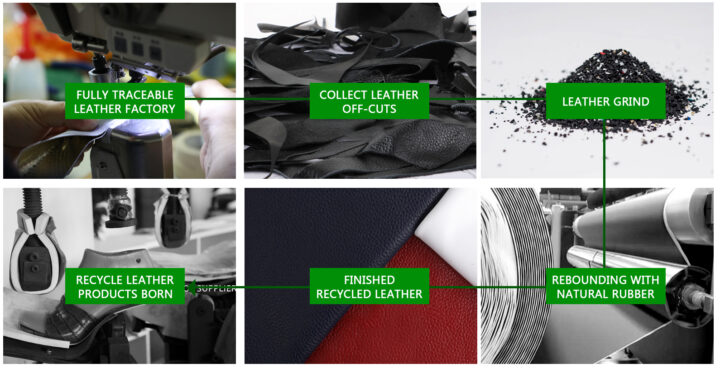
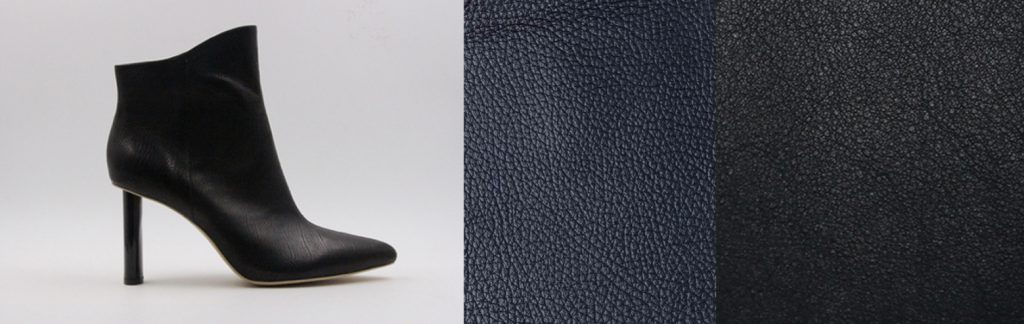
It is a green process technology; real leather tanning processes involve large amounts of water and electricity. Our eco-friendly leather shoes and custom leather goods are made from sustainable recycled materials through a process of smart recycling of natural leather fibers.
2. VEGETABLE TANNED LEATHER
Vegetable tanned leather is different from traditional chrome tanning, using only natural tannins without negative environmental impact. This tanning method is ancient and requires skilled craftsmen, making vegetable tanned leather products more prestigious. Due to the careful tanning process and natural tannins, vegetable tanned leather develops a rich and beautiful patina, and actually gets better with time and use. It doesn’t crack or dry out and thus has a very long lifespan, carrying an earthy and natural tone and smell.
However, chrome tanned leather is produced using a solution of chemicals, acids, and salts to dye the hide. It’s cheap, quick, and mass-produced, typically requiring little skill from the tanners. Chrome, like any heavy metal, is extremely toxic and environmentally damaging, creating toxic wastewater leftovers. Our ethical team at your preferred shoe manufacturer is so excited to make new ethical products, taking greater social responsibility.
3. PINATEX
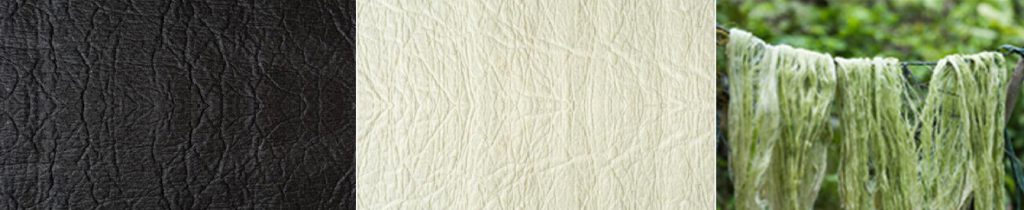
Pinatex is a fiber that comes from pineapple leaves. It is considered sustainable because it uses the by-products of pineapple harvests, so there is no need for extra resources to produce it. Not only is it a cruelty-free replacement for leather, it is natural and sustainable. As Pinatex is made from a food by-product, it reduces waste and helps the farming communities that grow the fruit! Piñatex is a versatile material which is strong, breathable, light, and flexible, and can be easily stitched, embossed, and cut for various footwear designs.
4. MICROFIBRE LEATHER
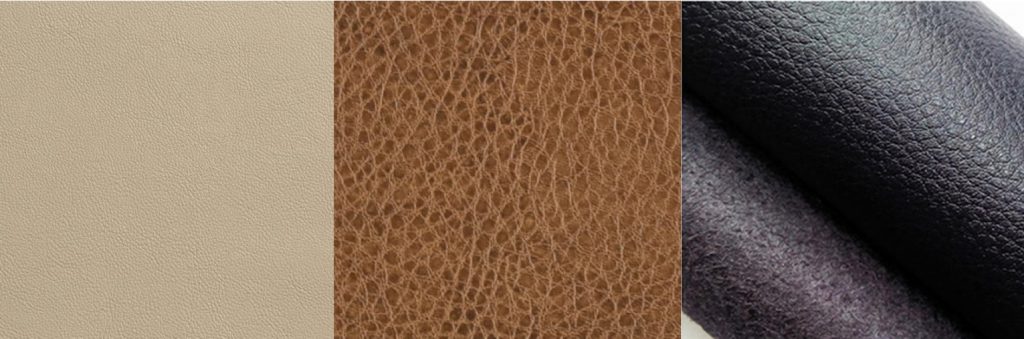
Microfiber leather is the highest quality grade synthetic leather (faux leather or PU leather), representing a high-tech simulation of high-end leather material. The performance of microfiber leather is better than real leather, and its surface effect can be achieved in line with real leather. Tear resistance, abrasion resistance, and tensile strength are all beyond real leather, and it is cold-resistant, acid-proof, alkali-resisting, and non-fading. Antibacterial, antimildew, and mothproof without any harmful substances, it is very environmental and regarded as a Green Product in the 21st century. It also has advantages like high utilization rate, easy cleaning, and eco-friendliness.
5. RECYCLED NYLON
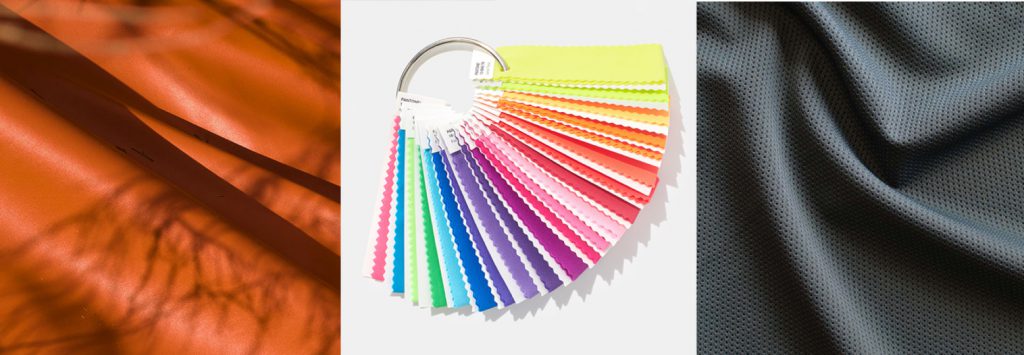
Recycled nylon has the same benefits as recycled polyester: it diverts waste from landfills and its production uses much fewer resources than virgin nylon (including water, energy, and fossil fuel). ECONYL is one good example of a certified, eco-friendly, recycled nylon fabric. ECONYL takes recycled materials to a whole exciting new level by turning waste into resource. To make ECONYL, waste such as industrial plastic, waste fabric, and fishing nets from oceans is recycled and regenerated into a new nylon yarn that is exactly the same quality as virgin nylon.
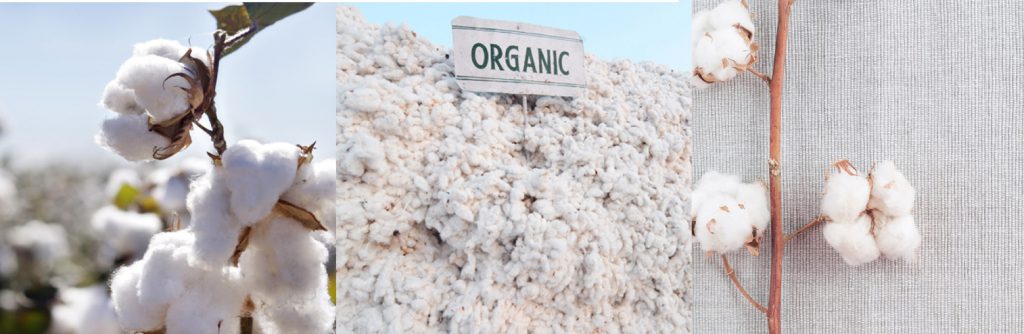
6. ORGANIC COTTON
This material has the same quality as conventional cotton but lacks the negative impact on the environment. Organic cotton addresses most of the environmental challenges which conventional cotton production faces. It is grown from non-GMO seeds and without the use of pesticides, insecticides, or fertilizers. Unlike conventional cotton, organic farmers use ancestral farming methods, including crop-rotation, mixed farming, or no-till farming to preserve the soil. Organic cotton uses up to 71% less water than conventional cotton according to some sources, eliminates toxic chemicals, improves soil health, and increases water conservation—benefiting the environment, farmers, and their communities.
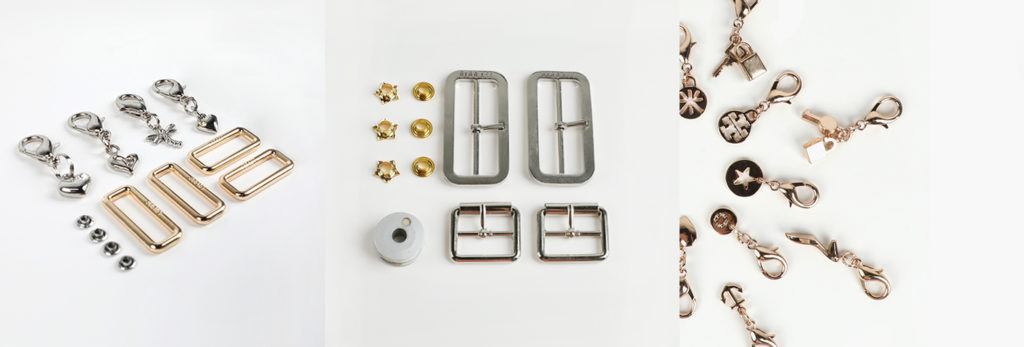
7. METAL
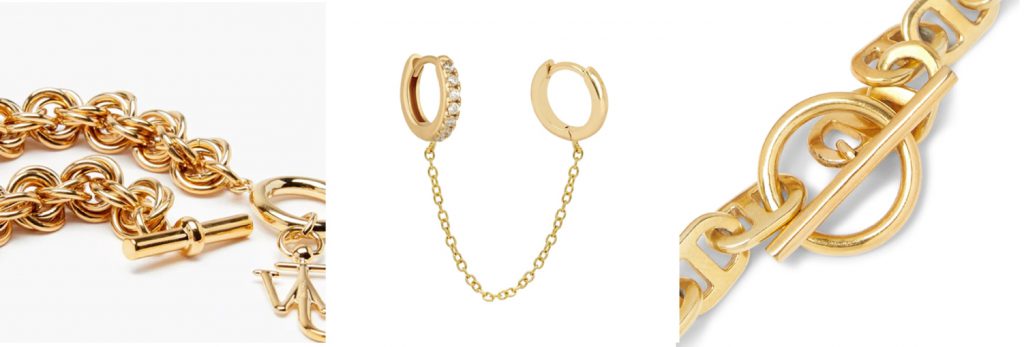
Although metal accounts for a small amount of our overall material usage, it has one of the highest impacts of all our materials. The majority of metals we use go into our bag chains, made from brass—an alloy of copper and zinc. We have now developed stainless-steel and aluminium alternatives that we use for some of our hardware. These chains have a lower environmental footprint as there is no copper mining involved and they use more sustainable coating processes. Because we create products that are built to last, we see the brass we do use as a precious material, ensuring our bags stay with our customers for years.
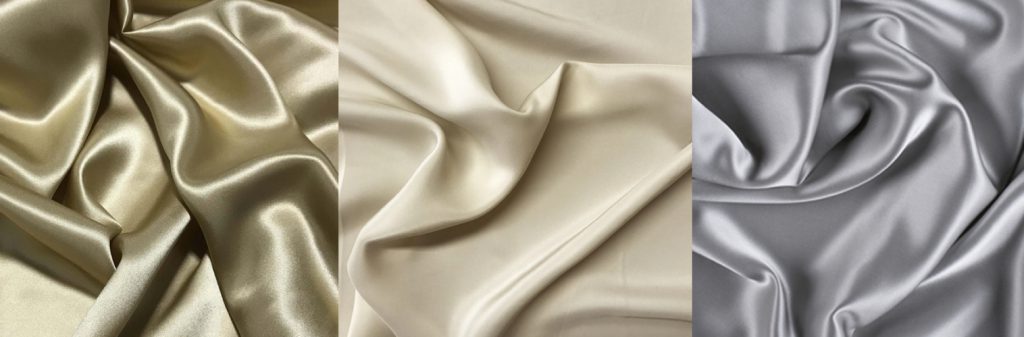
8. SILK
Silk is a protein fiber spun by silkworms and is a renewable, biodegradable resource. For these reasons, we consider silk a sustainable fiber. However, chemicals are used to produce conventional silk, so we will always consider organic silk to be a better option. Because conventional silk production kills the silkworm, The K Family Shoe Factory prefers Peace Silk that causes no harm to silkworms.
As a business owner of footwear and accessories, THE K FMAILY FACTORY takes pride in the fact that ethical materials reduce long-term problems stemming from limited resources and end-of-life disposal.